Jenkins - Fandom, audience participation
- merchandise, stranger things secret cinema experience
- citizen journalism : Ariana Grande concert footage, Grenfell, London Bridge stabbings
the idea that fans appropriate texts and read them in ways that are not fully authorised by the media producers ('textual poaching')
usefulness for news :
- show audience's role in distributing the news- e.g. sharing an article on twitter, instagram, snapchat
- create community of fans of the newspaper, regular readers, contributors, etc. Show fandom through buying the paper itself - circulation, profit.
- citizen journalism is alive and well : youtube, social media enables people to make media
not useful :
- fandom of news doesn't stand out from any other fandom: less so even as the ability to 'create' and 'textually poach' is much less.
- fandom is very much 'youth driven' - so it excludes a whole demographic and is therefore less useful in understanding news.
- however, still big corporations who have the monopoly
Bandura - hypodermic syringe model - immediate effects
- the idea that the media can implant ideas in the mind of the audience directly
- everyone has freedom of choice - not everyone believes what they read/told
tv drama- D83 :changes peoples perspective of east and west Germany
Gerbner - cultivation
- the idea that exposure to repeated patterns of representation over a long period of time can shape and influence the way in which people perceive the world around them (cultivating particular views and opinions )
gerbner found that people who watched a lot of television were likely to have a more negative view of the world : than people who did not watch television.
Showing posts with label Audience. Show all posts
Showing posts with label Audience. Show all posts
Tuesday, 3 March 2020

Friday, 29 March 2019
Friday, 15 March 2019
Thursday, 7 March 2019
Tuesday, 5 March 2019
different versions of Minecraft are available on which different platform?
playable on windows, Mac, linux computer
Minecraft for windows 10
Minecraft for mobile phones, apple, android, amazon, window
xbox one
ps4
crossplay-
cross platform play is a term used to describe the ability of a video game across different platforms such as; computer/ pc, xbox, playstation, Nintendo.
overall brand-
increasing the target audience potentially increasing sales- due to being on different platforms
reinvested into game increasing overall gameplay
from years 2014/2015 business year Minecraft tripled their revenue from 1 million to 2 million- Microsoft purchased Minecraft from Mojang for a record 2.5 billion.
realms-
allows players to create and manage their own private Minecraft servers. They are not intended for large public servers but for groups of friends or as a family server.
-always online
- play your way anytime/ anywhere
-easy
-safe and private
how has it enhanced gameplay?
no other game has achieved anything this pervasive as of writing
twitch tv
streaming website that is primarily based around gaming, but is broadening its horizons with the IRL section.
live streaming feature that is very easy to use meaning that most people will be able to to access it compared to on other platforms
Minecraft has its own twitch channel where fans and other pro players stream themselves playing Minecraft, completing different set challenges or just streaming their survival world.
Channel has got 34,803 with a total 2,372,538 views.
how Is it regulated?
under a system called PEGI (the pan European game information scheme)
cannot monitor explicit language, chat is monitored so that any explicit language is not allowed to be said on the chat.
Monday, 4 March 2019
why is Minecraft so successful?
- Sandbox with infinite replay-ability
- the game is only limited by the confines of of your imagination
- platform agnostic
- co-opted by children
- players creations are Minecraft own marketing campaign
- strong community
- the game is only limited by the confines of of your imagination
- platform agnostic
- co-opted by children
- players creations are Minecraft own marketing campaign
- strong community
Friday, 1 March 2019
Minecraft facts
Minecraft development referred to as online lego is a Multiplatform open sandbox which started as an 'indie' and was critically and commercially successful.
・Minecraft was created by 'Marcus 'notch' persson and developed by Mojang.
・These were independent separate too and not financed by a big commercial company.
・But, as small independent products become successful, it is usual for larger organisations/ owners to want to buy them .
・Minecraft was created by 'Marcus 'notch' persson and developed by Mojang.
・These were independent separate too and not financed by a big commercial company.
・But, as small independent products become successful, it is usual for larger organisations/ owners to want to buy them .
Video game terminology
Platform- different formats games are available in such as IOS, PS4, Xbox, Linux
Cross media platform- games available on more than one format
Conglomerate- large media companies that own smaller media companies i.e. Sony
Developer- people or companies that come up with the the concept for the game
Digital Distribution- making the game available to audiences e.g. steam
Engine- a system designed for the creation and development of video games e.g. unreal
PEGI- Pan European Games Information- age rating system for regulating video games
Designer- people of companies who bring concept of the game
RPG- Role playing Game
MMORPG- Massively Multiplayer online role playing game
FPS- first person shooter
Event release- hyped date used heavily in marketing of new games
Triple A game- an informal classification used for video games with the highest development budgets and levels of promotion
Open World- players free to roam in a virtual game world
DLC- downloadable content
Sand Box- style of game with that allows the user to change the world around them whenever they want
Different types of video games
. RPG
. Sports
. Strategy
. Action/ ADV enture
. Construction/ strategy/ building
. FPS
. Simulation
. Horror
. Puzzle Solving
. Children's
. Sports
. Strategy
. Action/ ADV enture
. Construction/ strategy/ building
. FPS
. Simulation
. Horror
. Puzzle Solving
. Children's
Thursday, 28 February 2019
Radio 1 test
1. How long has Greg James been presenting The Radio 1 Breakfast show?
Greg has been presenting since September 2018.
2. What is the age range of the target audience that the R1BS aim to attract?
The age range is 15-20 year olds.
3. What are the main differences between R1BS and commercial stations' breakfast shows like Capital FM?
The main difference is that BBC Radio 1 is paid for by the government as it is a public service broadcaster but capital fm is mainly paid for through advertisements.
4. List as many ways audiences can access Radio 1 that you can think of.
Through social media such as facebook and twitter, and youtube as it is free to access but a good way of advertising. Because of this the public are able to access the show once it's already been shown and can also rewatch it if they wanted to.
5. How can the audience interact with the R1BS?
The audience can interact by the radio 1 number being given out on then show to give the audience a chance to enter a competition or to be entered into a game that will be on the show.
6. Which professional body regulates Radio and how might this affect what is broadcast?
Ofcom regulate the standards of the show, the BBC initially handle the complaints and then Ofcom overlook it.
7. How does The R1BS fulfil its remits as a public service broadcaster?
The breakfast show fulfils Its remit by engaging the audience constantly through games, quizzes and social media.
8. Why is the controller of Radio 1, Ben Cooper unconcerned about the drop in listening figures for the R1BS?
As the audience who was plummeting was not the target audience (30+) therefore Ben Cooper in fact congratulated Nick Grimshaw in scaring off the other audience. As it may have of had an effect of the atmosphere around the station due the varied audience.
WITH REFERENCE TO R1BS EPISODES give examples:
9. How does the program promote British music?
The show promotes British music by introducing new music from the artist themselves which would entice listeners to hear the new single by a new upcoming British artist.
10. What genres of music were played during your slot? Give some examples.
Mostly chart music was played during my slot, such as Little mix and Ariana Grande who are both very popular in the charts at the moment.
11. Celebrity interviews - Who is being interviewed and what are they being interviewed about? How many of the interviews are with British people?
Many people are interviewed on the breakfast show, most of them are British as it is easier and cost effective for them to be interviewed, but occasionally there will be bigger artists and comedians from all over the world. For example, Kevin Hart.
12. News items - List the stories and identify which relate to Britain.
Brexit, Immigration, Sport and crime.
13. Quizzes and games - what can you win?
'Jan Slam' a prize won every day in January if you enter the competition. Also 'unpopular opinions' segment.
14. How does the broadcast fit into the BBC ethos of 'informing, educating and entertaining'?
The news and weather are every 30 minutes which helps the audience as it is informing them of any local issues and concerns
15. How does it differ from commercial breakfast shows?
BBC R1 is paid for by the government, whilst commercial stations such as Capital FM are predominantly paid for by advertisements. Therefore no paid advertisements are audible on air during the BBC radio 1 breakfast show comparing to maybe other radio stations such a commercial stations.
16. Who do you think the audience is from the content of 'your section'? What evidence do you have for this?
A target audience of 12+, this is because some of the content wouldn't make sense to a very young audience as they would not be aware of things going on around them in the world in enough detail. Some of the jokes etc. would also not be massively understood by a young audience.
17. How large is the audience for the Radio 1 Breakfast show?
The average amount of listeners is 5.1 millions per week.
18. Which five audience categories did the BBC Trust use to measure audiences in 2016?
19. Which BBC radio station is most targeted at a mass audience?
Radio 2 has the largest target audience as it is over 35s, therefore this could depict anyone as the sing choice, guests and more appeal to all various ages dependant on the day therefore a vast audience range reigns.
20. Which BBC radio station is most aimed at a niche audience with high levels of cultural
capital?
Monday, 25 February 2019
Radio 1 Essay
How is the BBC Radio 1 breakfast show reaching, targeting and encouraging audience interaction?
The BBC Radio 1 breakfast show have improved greatly with their audience interaction over the years, due to hosts like Greg James introducing various different games and segments in the show that have involved the audience more than ever before; increasing the listeners massively.
The remit of Radio 1 is to entertain and engage a broad range of young listeners with a distinctive mix of contemporary music and speech. However, they do have audience members of a younger age and older age possible depending on their parents music taste and what they listen to.
The remit of Radio 1 is to entertain and engage a broad range of young listeners with a distinctive mix of contemporary music and speech. However, they do have audience members of a younger age and older age possible depending on their parents music taste and what they listen to.
An example of the way in which the breakfast show are enticing the audience is by the competitions, such as the 'Jam Slam', which if you enter you could potentially win a prize, trip, concert etc. This would target there older audiences as you have to be 18 to enter and some of the prizes are family orientated. Although the competitions target an older audience, they also target younger listeners, due to the music that is played throughout the morning, such as pop and chart music, which would be reaching out to teenagers and young adults.
Various games are played in prime time, so that the audience are interacting with the presenters. Games such as 'replying to celebrity worst reviews', are played on the breakfast show, which entices the audience as it is an interesting topic which the listeners could give their opinions on. As well as this, segments called 'Unpopular opinions' encourages audiences to phone in and share their unpopular opinion with Greg James and the rest of the audience listening. This is successful as it presents the breakfast show as a casual conversation between the presenter, Greg James, and the audience, making it more friendly and not just one-sided. This would've been a main factor into the increase of listeners as the show has a more talkative and relaxed tone to it.
Social media is another way in which the Radio 1 breakfast show is targeting their audiences as this is a main way to advertise and promote their show, due to the popularity of sites such as Twitter, Instagram, and Facebook. The Radio 1 twitter account has a total of 3.1 million followers, this appeals to a vast audience, so giveaways present on the Radio platform are re-posted to increase the audience awareness. This increases the audience interaction by applying and phoning the show to enter to great opportunity's that are provided for free!
Sneak peaks of interviews with celebrity guests and teasers of songs are also posted on their social media accounts, therefore encouraging the public to listen to the show as the teaser would've enticed them into it.
Overall, the BBC Radio one breakfast show has vastly improved with listeners and ratings since Greg James has become the presenter, with the main factor being because he has created successful segments for the show which have encouraged more people to listen.
Sunday, 24 February 2019
Radio 1 Breakfast Show
Research-
- The first breakfast show presenter was Tony Blackburn, he remained in the role for nearly six years.
- Others that have been dj's and/or presented radio 1 are John Peel (1967), Kenny Everett (1967), Annie Nigjtingale (1970), Simon Bates (1980), Miss P (1984), Chris Evans (1995), Greg James (2017).
- Nick Grimshaw stepped down from hosting the BBC stepped down from hosting the BBC Radio 1 breakfast show, the dj told listeners that he was 'tired' and was ready to hand over nearly a year ago. He is now the second- longest serving breakfast show presenter in the stations history.
- The records present that radio 1 have an average of 5.72 million listeners a week.
- The controller of BBC radio 1 is Ben Cooper.
- Radio 1 is very distinctive through through the use of a broad range of youth listeners with a very vast mix of contemporary music and speech. It offers a range of new music, support emerging artists -especially ones from the UK- and provide platforms (synergy) of live music. The main genre of music that is played is Pop and chart music.
- The BBC is much stricter when it comes to brands mentions, whilst BBC breakfast tends to be hard news and lunch time tends to be predominantly chat shows. Commercial tend to typically target a vaster audience than the BBC and use pre-recorded interviews which kills to birds with one stone.


Social media and the Radio 1 website:
- The website is aimed at a younger target audience; this is evident by the presentation of the young emerging and popular artists. Therefore the younger artists predominantly attract a younger target audience. Also various games (try not to laugh laugh challenge w/ water) is present which again would predominantly appeal to a younger target audience.
- To fulfil the PSB, Radio 1 provide precise and impartial news, current affairs and factual programming of the highest editorial standards so that all audiences can engage fully with issues across the UK and the world.
- Educational content will help support learning for children and teenagers across the UK, whilst audiences will be engaged to explore inspiring and challenging new subjects and activities through a range of partnerships.
- Innovative content covering may different genres will be provided across a range of services and platforms, setting the standard in the UK and the world.
Thursday, 13 December 2018
Wednesday, 28 November 2018
Millennials VS Boomers
Millennial's VS Boomers
News Readers-
Millennial : The younger generation (under 30), that get they news from twitter and social media platforms online.
Boomers: The older generation (above 30) , that traditionally watch BBC news at 6pm where the main focus is formal news on politics , weather and world issue. Or Channel 4 for catch up.
News Addicts- Types of readers/ people :
・ Fix- access news constantly, prompted by a general need and state of distraction.
・Track- access news regularly throughout the day to keep up to date with breaking stories.
・Fill- access news to pass the time when moving from one place to another.
・Indulge- make time to enjoy the news as a break from everything else in the day.
・Invest- read the news regularly to get an in depth perspective on stories.
Examples of when stories are posted online before they are published as proper news on tv:
- Bitcoin
- Harry Potter filming scenes being leaked before the film was in screening
- Terrorism attacks
- Natural disasters
The Pros and Cons of social media news:
Pros:
- Immediacy
- Everyone can report on it
- Stories spread very quickly
- Phones can be where Tv filming isn't
Cons:
- 140 characters to write a story/post on twitter
- False news
- Facts missing/inaccuracy
- Biased/one sided
- Amateur reporters putting others in danger in order to get news
TOP 4 NEWSPAPERS-
1. Metro
2. The Guardian
3. The Sunday Times
4. The Daily Mail
Newspapers
The Guardian: Is the 4th famous in the world but 2nd most read. It is known for being a well-written, interesting, informative, intelligent and good for politics.
The Daily Mail: Is the most famous newspaper today, however contrasts to the amount of readers making it the 4th most read newspaper. The Daily Mail is known for standing up for ordinary people, interesting, informative.
The Sun: The Sun has a reputation for being entertaining, amusing, good for sport and read by ordinary people. However, the false and exaggerated news makes this newspaper 13th most popular.
Friday, 23 November 2018
Why have print newspapers sales declined?
Throughout the years there has been a major decline in print newspaper sales, due to many factors.
One main explanation for this is the growth of the more easy, accessible way of reading the news, which is on the internet. The sudden rise in technology and social media has resulted in a thorough decline of printed newspapers. However, a majority of popular newspaper companies such as the Guardian and The Daily Mail post all of their daily stories on their websites, to stay relevant and an interest to the public. Since 2005, 55% of the public said that they'd prefer to use mobile devices and the internet to access the news, rather than a printed newspaper, therefore, having these websites would make it more convenient and easier for the public.
Most mobile phones have applications which would have the daily news stories on them, with live updates so everyone is aware of what is going on constantly.
This factor would have led to a decline in the newspaper print, because buying one consists of physical activity so therefore wouldn't fit everyone’s life-styles and routines. Supporting the reason why the average group to get newspapers is 50+, as well as this a lot of the older generation aren't accessible to an iPhone, iPad or any sort of tablet, therefore wouldn't be able to access the news online only by hard copy.
Using the internet as your news source is a positive, due to readers commenting on various articles to comment their views and opinions, making the article more accurate and to look at the story from all points of views.
According to studies, The Daily Mail had a decrease of 55% of papers sold during 2000 since 1960.
However, a negative of using the internet as your news source, is that it has to require a internet connection in order to access the papers, so you could lose stories as more stories over write them.
Another factor that has contributed to the decline in newspapers sales, was Television's arrival in the 1950's. The exposure of this increased the range of media choices available to the public, while further into newspapers dominance as the source of news.
Television and internet both bring news to the consumer faster and in a more visual style than newspapers, which are constrained by their physical format, manufacturing and distribution.
In contrast, free newspaper is available to read for those who commute on the train and tube, often on the way to work. The newspaper is usually a mid-market paper, for example Metro or The Independence meaning the public have a variety of hard and soft news to read. The idea of reading a printed copy of a newspaper on the train would sound more appealing than on a mobile devise, to some people.
Overall, the major decline of print newspaper sales has been due to the advancements in technology by making some peoples daily routine of buying a newspaper, more convenient and favourable as it is all online. It has benefited the public because of the efficiency, making online newspapers more popular than ever.
The Guardian News values
Target Audience-
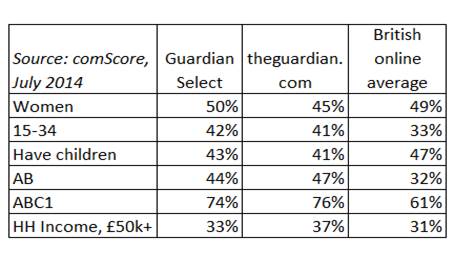
⇒76% of Guardian Select UK Audience are Progressives, who are affluent forward-looking individuals, curious about the world and embrace change and technology
・Looking from everyones point of view/ both sides of argument
・Wolf= government--- Pigs = Public, not affording a mortgage
・Water boiling over= financial symbolism
・ Worldwide problems presented - search for the truth
・Binary of Individual VS Institution
It highlights the Guardians struggle to remain relevant in the evolution is of technology, hence why they use the twitter and hashtag formats as the primary form of how people are following and commenting on the story, as well as tablet applications.
The campaigns use of the three little pigs could be seen as an extended metaphor, the pigs being the guardian, taking new measures (boiling the wolf/evolving/modernising) to stop their houses (company) collapsing.
⇒76% of Guardian Select UK Audience are Progressives, who are affluent forward-looking individuals, curious about the world and embrace change and technology
More people are reading The guardian News more than ever; with a 16% increase in page views and 14% increase in browsers from 2016-2017.
According to The Guardians' statistics, they reach 24.1 million views monthly, where as The Telegraph reach 23.1 million, The Independent 17.3 and The Times 8. The Guardian also influences 13.6 million views weekly and 4.8 million daily.
Additionally, their personal readers completed a survey about their journalism; 87% trust what they read, 84% feels a close connection, 82% believes that it offers them an aspect they can't get anywhere else, and finally 98% states reading their news is time well spent. They typically target a well-educated, relatively young, predominantly male and liberal audience centred around London. 52% of Guardian readers are male, and the average reader is 44.
⇒The Guardian is very subjective with their views rather than objective.
'Three Little Pigs' advert-
・Looking from everyones point of view/ both sides of argument
・Wolf= government--- Pigs = Public, not affording a mortgage
・Water boiling over= financial symbolism
・ Worldwide problems presented - search for the truth
・Binary of Individual VS Institution
It highlights the Guardians struggle to remain relevant in the evolution is of technology, hence why they use the twitter and hashtag formats as the primary form of how people are following and commenting on the story, as well as tablet applications.
The campaigns use of the three little pigs could be seen as an extended metaphor, the pigs being the guardian, taking new measures (boiling the wolf/evolving/modernising) to stop their houses (company) collapsing.
Friday, 9 November 2018

Thursday, 8 November 2018
Newspaper Terminology
Newspaper Terminology-
> MastHead - Title of the newspaper displayed on the front page.
> Barcode- Used to scan the newspaper when purchasing it is an optical, machine- readable, representation of data contains information such as price.
> Caption- Brief text underneath an image describing the photograph or graphic.
> HeadLine- A phrase that summarises the main point of the article. Usually in large print and a different style to catch the attention of the reader.
> Main Image- Dominant picture, often filling of the front cover.
> Page Numbers- A system of organisation within the magazine. Helps you find what you want to read.
> Target Audience- People who the newspaper aims to sell to.
> Pull Quote- Something taken from within an article, usually said by the person in the main image.
> Classified Ad- An advertisement that uses only text, as opposed to a display ad, which also incorporates graphics.
> Skyline- An information panel on the front page that tells the reader about other stories in the paper to tempt them inside.
> Edition- Some newspapers print several of these every night, these are versions with some changes and maybe additional late stories.
> Stand First- Block of text that introduces the story, normally in a different style to the body text and headline.
>Byline- The line above the story, which gives the author's name and sometimes their job and location.
> Body Text- Also known as copy. Written material that makes up the main part of an article.
> Standalone- Picture story that can exist on its own or on a front page leading to a story inside.
> Centre Spread- A photograph, often in full colour, that runs across the middle two pages.
> Lead Story- Main story, usually a splash.
> Cutter- The blank space between margins of facing pages of a publication or the blank space between columns of text.
> Folio- Top label for the whole page. Can relate to the area covered in the paper, for example, National or big news topics such as Social Media, Syria.
> Page Furniture- Everything on a page expect pictures or text of stories.
Subscribe to:
Posts (Atom)
-
How is the BBC Radio 1 breakfast show reaching, targeting and encouraging audience interaction? The BBC Radio 1 breakfast show have ...
-
・2011- written by Sia, David Guetta, Giorgio Tuinfort and Afro jack music video release- 11th December 2011 ・Genre- house and urban...

